Structural Drying & Dehumidification in Atlanta, GA
Once the standing water is gone, the water inside your walls, subfloor, and framing still has to come out. We set air movers and dehumidifiers, map the moisture, and monitor it daily until the structure reads genuinely dry — not just dry to the touch.
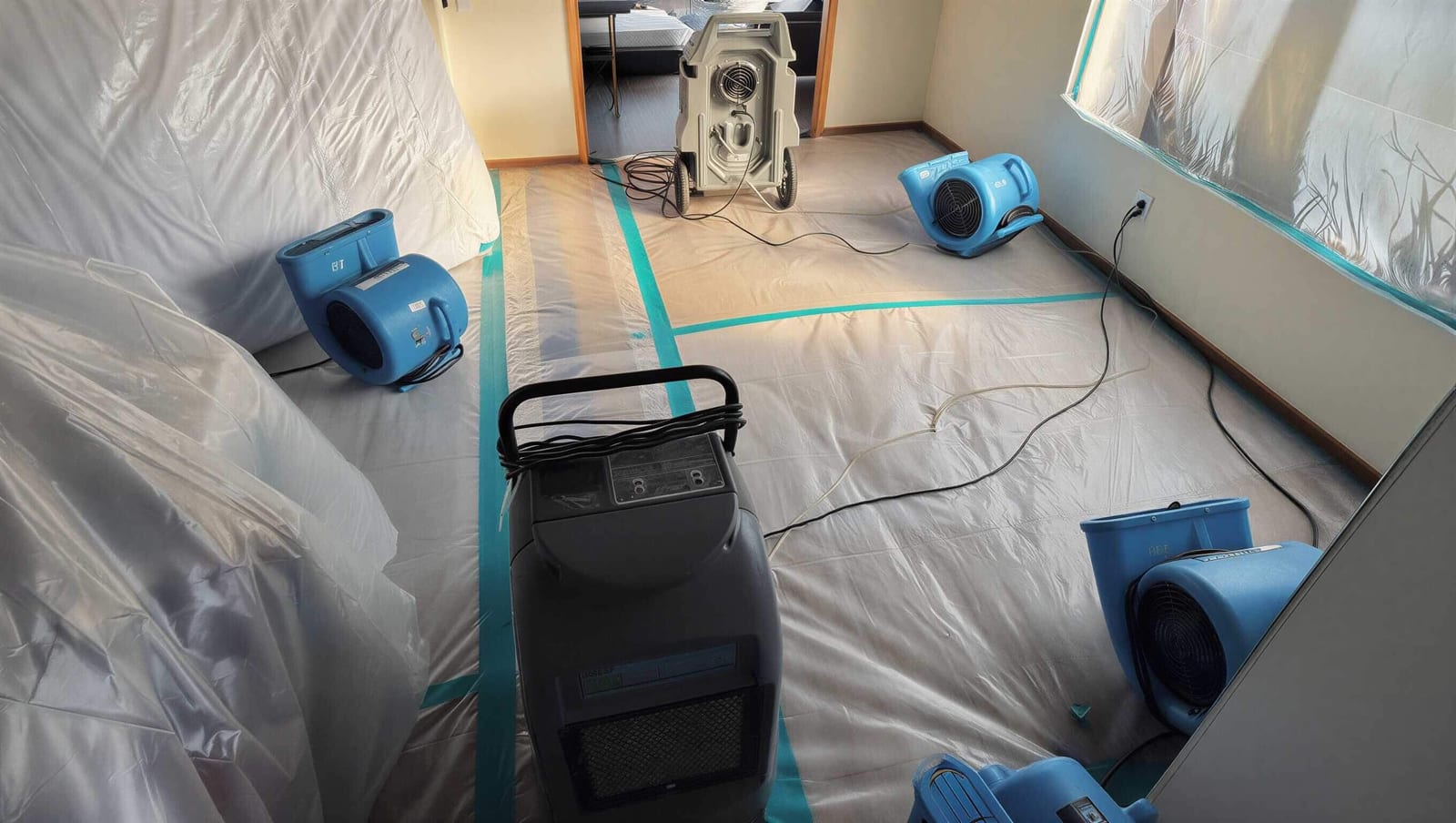
Pulling out the standing water is only half the job. The moisture soaked into your drywall, subfloor, and framing has to come out too — or it warps wood and feeds mold for weeks. We dry to the actual moisture readings, not the calendar, and prove the structure is dry with the numbers.
What our structural drying includes
One Atlanta crew, the right equipment, and a number to hit — not a couple of fans and a guess:
- A full moisture map — meters and a thermal camera find the water behind walls and under floors, not just where it pooled.
- LGR dehumidifiers & air movers — sized to the room and the amount of water, balanced so moisture leaves the home instead of circulating in it.
- In-place drying for trapped water — injection and mat systems dry wall cavities, hardwood, and floating floors instead of tearing them out.
- Daily monitoring & a documented dry standard — readings logged and photographed for your insurance claim, showing the structure reached dry and when.
How the drying works
- Map the moisture
We read every affected material and a dry reference area, so each room has a real target to hit — you can't dry what you haven't measured.
- Set air movers & LGR dehumidifiers
Air movers sweep moisture off the walls and floors; low-grain refrigerant dehumidifiers pull it out of the air, keeping the room drier than the materials so the drying never stalls.
- Reach the trapped water
Where water is sealed in a wall cavity or under a floor, injection and mat systems drive dry air straight into the space.
- Monitor & confirm dry
We log readings daily, move and add equipment as the numbers fall, and only pull the gear once the materials hit the dry standard.
Why measured drying beats a few box fans
- Fans only move air — they don't remove water from it. In Atlanta's humidity that often just pushes damp air across a wet wall while mold gets a head start.
- "It looks dry" is the costly assumption — framing and subfloor can read wet on a meter for days after the surface feels dry, and that hidden moisture is what warps wood and feeds mold.
- We call it dry when the meter says so and prove it with readings — something a rented machine can't do.
Frequently asked questions
How do you know when a structure is fully dry?
We measure it. Each affected material has a dry target — a moisture reading set against an unaffected reference area in the same home — and we take readings every day with penetrating and non-penetrating meters until the materials hit that target. We don't call it dry because the surface feels dry or a set number of days passed; we call it dry when the numbers say so, and we document those readings for your records and your claim.
How long does structural drying take?
Most homes dry in about three to five days, but it depends on how wet the materials are, what they're made of, and the humidity — a finished basement or hardwood takes longer than open drywall. That's exactly why we monitor daily and dry to the readings instead of promising a fixed number of days.
Why is professional drying better than fans alone — especially in Atlanta's humidity?
Fans move air, but they don't remove water from it — and in Atlanta's humidity that air is already carrying a lot of moisture. Without a dehumidifier creating drier air than the wet materials, a fan can circulate damp air across a wall for days and barely dry it, while mold gets its head start. Professional drying pairs sized air movers with LGR dehumidifiers and controlled temperature, so moisture actually leaves the materials and the home — and we prove the result with readings, which rented fans can't do.
Walls still wet two days later?
Surface-dry isn't dry. If the materials are still holding water, mold and warping are already starting. An Atlanta crew can set drying equipment today and monitor it to dry.
Call (470) 748-0180Licensed, insured & trained to industry standards


Dry it right the first time
Hidden moisture doesn't fix itself — it warps wood and feeds mold while you wait. Tell us what happened and an Atlanta crew will get drying equipment in place and monitor it to dry.
Call (470) 748-0180